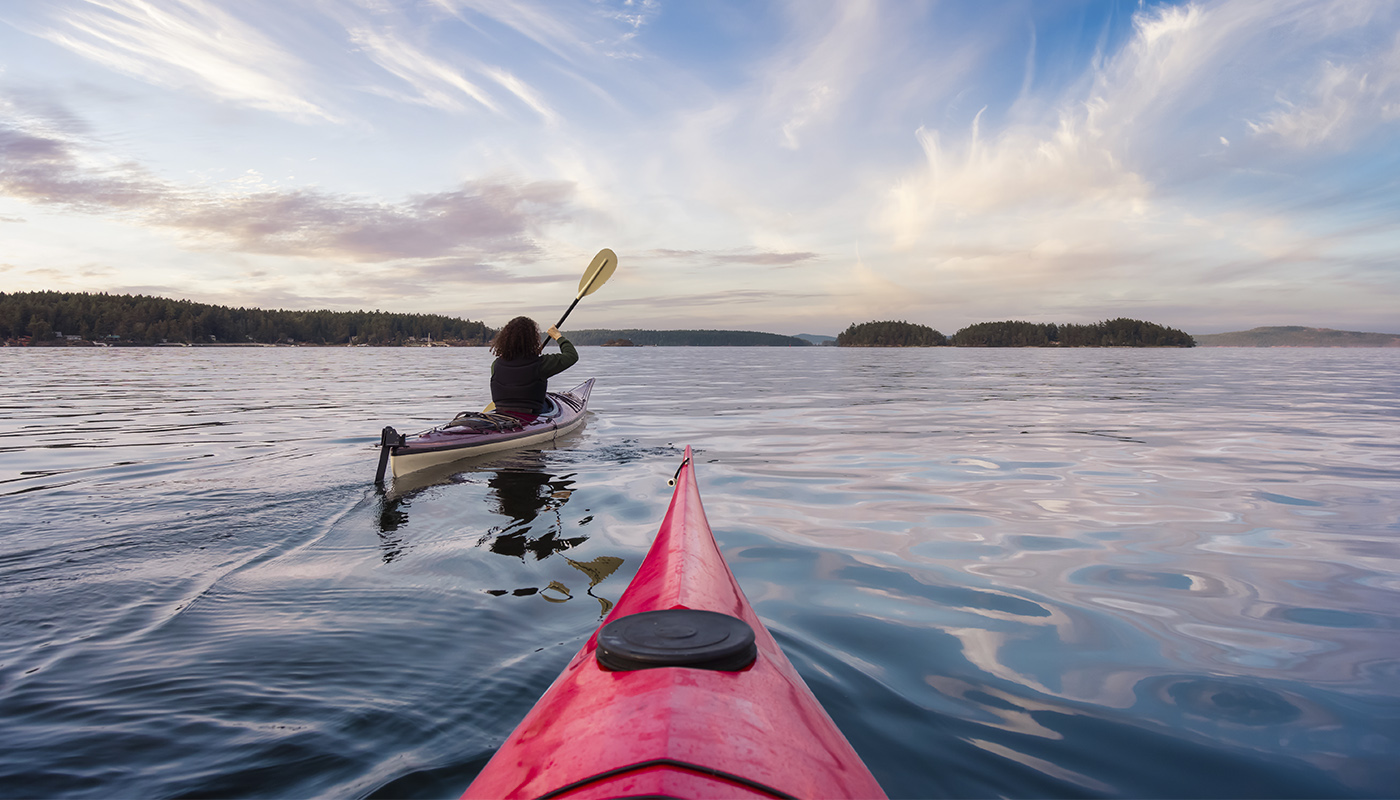
Kayaking can feel simple, but a first trip becomes easier when basic skills are known before launching. Kayaking tips for beginners should cover equipment, body position, paddle control, weather, water temperature and safe route planning. Calm lakes, slow rivers, and protected shore areas are usually better places for early practice because they give more time to learn balance, steering, stopping, and getting back to land.
Kayaking Tips for Beginners Before Launching
A beginner should first choose water that matches skill. Calm and protected water is easier than an open sea, a strong current, or a river with difficult obstacles. New paddlers also should avoid going alone. A more experienced companion can help with boat handling, route choices, and problems during the trip.
A life jacket should fit correctly and stay on while the kayak is on water. It should not be loose around the body, because poor fit can reduce how useful it is after an unexpected fall. Clothing needs to match water temperature, not only air. Water can stay cold even when the day feels comfortable, and immersion changes the situation.
Before departure, check the weather forecast and look at water conditions. Wind, waves, current, tide, and approaching storms can make a simple route harder. Beginners should be ready to change or cancel a trip when conditions are not suitable. A planned route is useful, but weather should decide whether that plan remains sensible.
Preparing the Kayak and Personal Gear
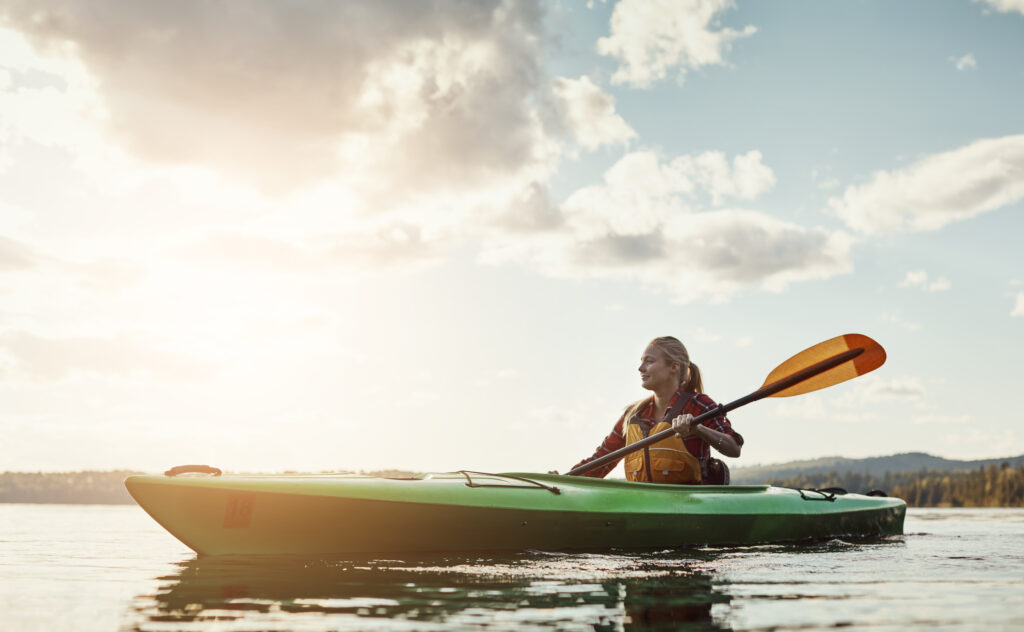
The kayak, paddle, and basic equipment should be checked before leaving shore. The boat needs to be in usable condition, and items should be secured so they do not move freely or disappear if the kayak tips. A whistle is useful for attracting attention, while a phone or other communication device should stay protected from water.
For a short recreational outing, beginners do not need to carry excessive equipment. They do need the items connected with safety, navigation, drinking water, weather protection, and getting home safely.
Basic Paddle Skills and Body Position
Good paddling begins with posture. Sit upright but relaxed, with feet supported and knees slightly bent. The body should not become stiff. A relaxed position gives better balance and lets the torso help with each stroke instead of forcing the arms to do everything.
Hold the paddle with both hands and keep the grip comfortable. Squeezing the shaft too hard can tire hands and forearms. For the forward stroke, place the blade into water near the feet, rotate the torso and move the blade back beside the kayak. Repeating this movement on alternate sides moves the boat forward.
Beginners should practice several basic controls:
- Use the forward stroke to move ahead with steady rhythm
- Use the reverse stroke to slow down or move backward
- Use a sweep stroke to turn the kayak
- Use a draw stroke when moving the kayak sideways is needed
- Practice stopping and changing direction before traveling farther from shore
- Learn how to exit and reenter the kayak in a practice setting
These movements are easier to learn on calm water. A beginner does not need speed first. Better control comes from repeating simple motions until they feel normal.
Entering, Exiting, and Keeping Balance
Getting into a kayak can be awkward. From a shore launch, keep the boat in shallow enough water and lower the body carefully into the seat. From a dock, hand position and body balance can change depending on how high the dock sits above the water.
When landing, approach slowly and stop where standing is safe. Sudden movement can make the kayak unstable. Keeping weight low and movements controlled usually makes entering and leaving easier.
Planning a Safe First Route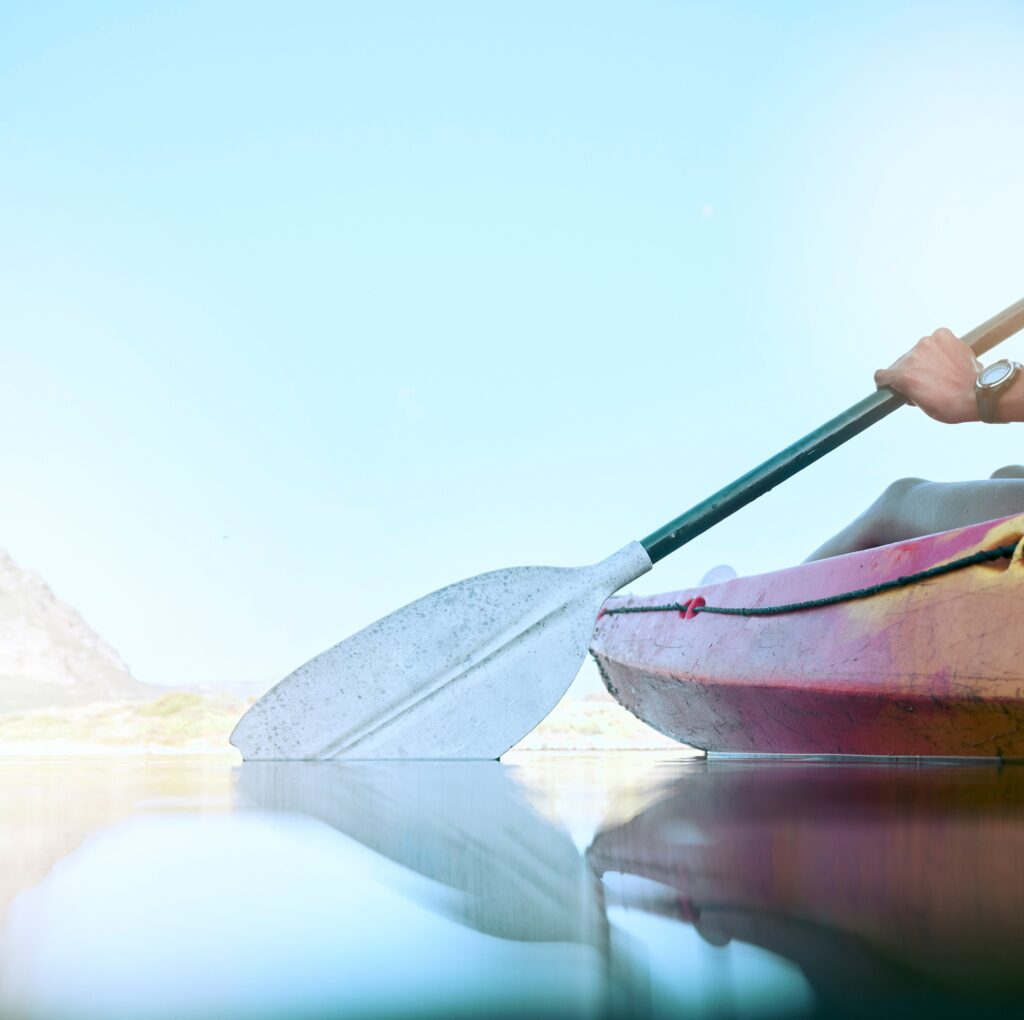
A first route should be short enough that returning remains comfortable. Wind is especially important because an easy outward trip with wind behind the kayak can become tiring on the way back. Beginners should stay close enough to shore and launch areas that changing conditions do not create a long, difficult return.
Someone on land should know where the paddler is going and when a return is expected. This is often called a float plan. It can include the route, launch point, destination, number of paddlers, description of boats, expected return time, and contact information. After returning safely, the person holding the plan should be told that the trip is finished.
Route planning also means understanding local hazards. Boat traffic, rocks, low branches, dams, changing tides, currents, and narrow passages can all affect a kayak. Beginners should not enter places where conditions are beyond their training. A steady pace also helps conserve energy for the return.
Building Confidence Without Rushing
Early kayaking improves through short practice sessions more than through one ambitious trip. Learn how the boat reacts when turning, stopping, leaning, or meeting small waves. Practice close to shore before trying longer distances.
It is also useful to learn what happens after a capsize. A paddler should know how to leave the kayak safely and should practice reentry or assisted rescue methods in suitable conditions. Formal instruction can make this learning more controlled and clear.